
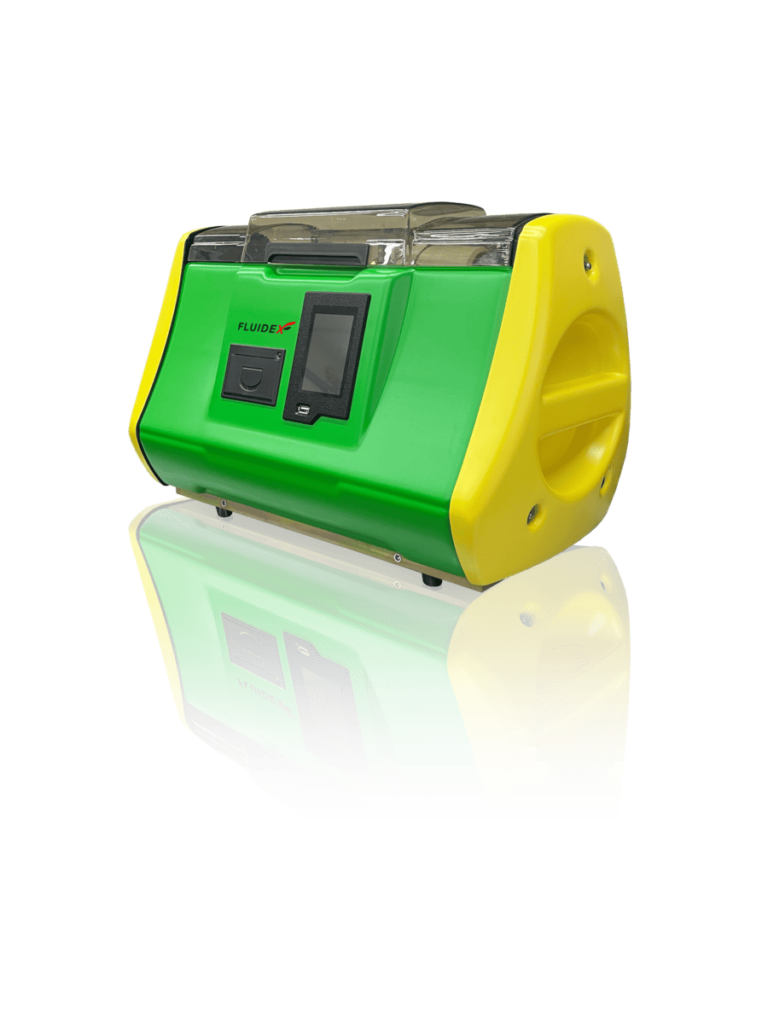
The diagnostic evaluation of transformer oil involves the use of transformer oil testers to determine product quality. Used in high-tech equipment, transformer oil shall have maximum purity and minimum viscosity. This fluid is used not only for filling of transformers, but also in oil circuit breakers and reactors. Transformer oil serves as insulation and transfers the heat generated in transformer windings and cores to the surrounding environment. Only high-quality mineral oil can be used in transformers to prevent the faults and failures of this equipment.
Causes of Transformer Oil Degradation
During operation, transformer oil accumulates impurities and moisture, which deteriorate its properties. The most dangerous contaminant is water: even a small amount (0.001%) can cause a critical decrease in breakdown voltage. Other harmful impurities include carbon, dust, fibers, and other particles. Due to environmental exposure and contamination, the lifespan of naturally aging insulating oil is typically two to three years, which is significantly shorter than the interval between major overhauls.
Oil aging manifests itself as oxidation, which is particularly intense at high temperatures. The oil containing dissolved acids and moisture loses its dielectric strength, deteriorates insulation materials, and may cause corrosion to the core.
Purpose of Transformer Oil Testers
Currently, oil quality is determined primarily by laboratory testing of samples taken from transformers. Laboratory monitoring is time-intensive, requires specialized testing equipment, and involves skilled personnel. Furthermore, transformers in rural electrical networks are distributed over vast areas, often more than 43,496 miles away from testing laboratories. Consequently, oil quality control is performed for only a limited number of transformers, typically once every four years, and sometimes, it is not performed at all.
Typically, the term “physicochemical analysis of transformer oils” refers to laboratory analysis of samples at a given point in time. In order to better reflect the assessment process throughout the transformer lifespan, transformer oil testers are used as a broader application tool. This monitoring results in technical decisions that:
- Maintain adequate quality of insulating oils, which is essential for reliability of transformers.
- Detect defects in transformers.
- Determine the acceptable operating modes of transformers.
- Define the scope of maintenance and repair work required to maintain adequate quality of insulation.
The timely measures taken to stabilize the insulation performance by removing the aging products from operational oil and restoring its properties on a continuous basis include preventive steps that ensure the required reliability of oil-filled transformers. Effective transformer oil testers serve as a tool to determine the optimal timing for these actions with minimum operating costs.
Diagnostic transformer oil testers
Modern transformer oil testers are used to analyze transformer oil, accurately detecting oil degradation levels and, in some cases, assisting in their rectification. These devices include:
- Insulation performance meters: determine oil conductivity.
- Dielectric property meters: measure the dielectric loss tangent.
- Moisture meters: detect moisture and impurities in mineral oil.
These compact devices can be used by maintenance personnel directly on site.
Breakdown Voltage Testers by Fluidex
One of the critical parameters of transformer oil is its dielectric strength, which determines the breakdown voltage. Dissolved air and other gases, as well as suspended carbon particles, significantly deteriorate the electrical insulating properties of oil. Breakdown voltage is a key indicator of transformer oil quality, defining the ability of dielectric fluid to withstand electrical stress without failure. The higher the operating voltage of the transformer, the greater the required dielectric strength of oil.
The FLD T tester is designed to measure the dielectric strength of transformer oil and other insulating fluids in compliance with IEC 60156, ASTM D877, and ASTM D1816 standards. This high-performance device features a test voltage range of 75 to 90 kV. The fully automated Fluidex tester facilitates testing according to these standard procedures and allows users to define custom testing procedures via the setup menu.
Dielectric Loss Tangent Testers by Fluidex
The dielectric loss tangent (tan δ) is an indicator of oil quality that is highly sensitive to various contaminants, including colloid formations, dissolved metal organic compounds, and aging products of both insulating oil and solid insulation. Determining the dielectric loss tangent (tan δ) helps you identify minor changes in oil properties even at minimum contamination levels, which cannot be detected by chemical analysis methods.
The FLD T tan delta tester is designed to measure the dielectric loss tangent (tan δ), permittivity, and electrical resistivity of transformer oils and other dielectric fluids in compliance with IEC 60247-2004-02 (VDE-0380-2:2005_01), ASTM D924-08, and ASTM D1169-02 standards. This fully automated device enables testing according to these standards and the custom procedures specified by the user through the setup menu.
Routine testing and monitoring of transformer oil quality are essential to ensure the reliability and longevity of power transformers. The use of advanced transformer oil testing units, such as the FLD T tan delta testers by Fluidex, helps you detect potential issues at an early stage, maintain optimal oil properties, and prevent costly transformer failures. Implementing a comprehensive transformer oil testing program is known to be a proactive measure that minimizes operational risks and enhances the overall efficiency of electrical power systems.
